Account Delete Rhinocasino Guide: A UK Player’s Review of the Process
Closing an online casino account is a practical decision, whether you are taking a break, moving to another operator, or no longer want your details held with a gambling site. This Account Delete Rhinocasino Guide looks at how a UK player can approach account closure, what to check before requesting it, and how to avoid confusing a temporary break with permanent exclusion.
Rhinoceros Casino’s available features and procedures may change, and the exact steps can depend on the account and the site’s current terms. Treat the guidance below as a checklist rather than a promise that every button or menu will look the same. If you cannot find a closure option, contact customer support through the official website and ask for the account to be closed.
Before deleting your Rhino Casino account
First, decide what you mean by “delete.” Casino sites may use several different terms: account closure, self-exclusion, time-out, or deletion of personal data. These are not necessarily interchangeable. Closing access may stop you from playing, while some account information may still need to be retained for legal, regulatory, financial, or fraud-prevention reasons.
In the UK, a licensed gambling operator generally has obligations to keep certain records. So, requesting account closure does not necessarily mean every piece of personal information will be erased immediately. You can separately ask the operator how it handles a data-erasure request, but its response may explain why some records must remain for a set period.
Check your balance and open activity
Before sending a closure request, review your balance, pending withdrawals, active bonuses, and unsettled bets. If there is money in the account, ask support how to withdraw it and whether any verification documents are still required. Avoid placing further bets simply to use a remaining balance: ask for the available withdrawal options instead.
Bonus funds can have separate terms, including wagering requirements and expiry dates. An account closure may cancel promotional funds or prevent you from completing those requirements. Ask support to explain what happens to both cash and bonus balances before confirming closure. Keep copies of relevant messages and transaction details for your records.
How to request account closure
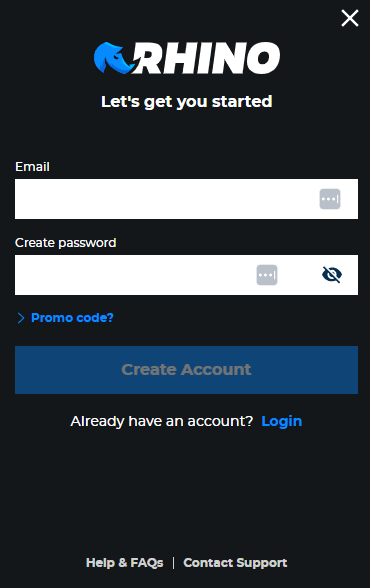
- Sign in only if it is safe and appropriate. If you are closing the account because gambling is causing harm, do not feel you need to log in to explore games or promotions. Use the official support channel, or seek help from an independent organisation.
- Find the account or help section. Look for settings, responsible-gambling controls, or a contact link. If there is no clear closure option, use the operator’s official live chat or email address.
- Make the request unambiguous. Say that you want the account closed and specify whether you mean a permanent closure or a temporary break. If you want self-exclusion, state that clearly rather than asking only to deactivate the account.
- Resolve withdrawals and verification. Ask whether any remaining balance can be withdrawn, what documents may be needed, and how pending transactions will be handled.
- Request written confirmation. Keep the confirmation, date, and any case reference. Check that marketing messages stop and do not create another account to get around a restriction.
For a clear written request, you could use wording such as: “Please close my Rhino Casino account permanently. Please confirm the effective date, explain how any remaining cash balance can be withdrawn, and confirm whether my account is also being placed under self-exclusion. Please also tell me which personal data must be retained and why.” Remove the self-exclusion sentence if you are not requesting that specific safeguard.
Account closure, time-out, or self-exclusion?
A time-out is generally intended as a short break, while self-exclusion is a stronger measure designed to prevent access to gambling for a chosen period or longer. Ordinary account closure may simply end access to that particular account and may not stop you from opening another one elsewhere. If your aim is to control gambling, ask specifically about self-exclusion and the protections that apply.
UK players can also consider GAMSTOP, a free national self-exclusion service covering online gambling businesses licensed in Great Britain. Registering with GAMSTOP is separate from closing an individual casino account. It can provide a broader barrier across participating licensed operators, but it is not a substitute for getting urgent support if you are at immediate risk.
Choosing the right option
- Temporary break: ask about time-out controls and how they work once the period ends.
- Permanent departure from one site: request account closure and ask the operator to stop marketing communications.
- Protection from online gambling: ask for self-exclusion and consider registering with GAMSTOP.
- Concern about personal information: contact the operator’s privacy team and ask about data retention and deletion rights.
What happens after the request?
The operator may need to verify your identity or clarify what you are asking for. Respond only through official channels, and do not send sensitive documents to an address you cannot verify. Ask support to explain how to submit any required documents securely. If the request is not acknowledged, follow up with the original message and note the dates of contact.
After closure, you may still receive account-related messages about withdrawals, verification, or regulatory matters. Promotional messages should stop if you have asked to opt out, though delivery systems can take time to update. If marketing continues, contact support and ask to be removed from promotional lists. You can also use the unsubscribe option in an email, provided it is genuine and relates to the operator.
Keep a record of your closure confirmation and any balance resolution. Do not attempt to bypass a self-exclusion by opening a new account or using another person’s details. Such actions can undermine the protection and may breach the operator’s rules.
Rhino betting fund addition limits and account closure
Players sometimes search for rhino betting fund addition limits while reviewing their account options. Deposit limits and account closure are separate controls: a deposit limit restricts how much you can add, whereas closure or self-exclusion restricts access to gambling. If you are uncertain about leaving the site, you can ask support how to set a lower limit or take a time-out. But if you have decided to stop, do not let a deposit control replace a clear closure request.
Limits can be useful as part of a wider plan, but they do not guarantee that gambling will be affordable or safe. Consider your own circumstances, and do not deposit money needed for bills, rent, or other essentials. If gambling is causing financial or emotional difficulty, seek independent support rather than relying solely on casino tools.
Questions UK players often ask
Can I delete my account without contacting support?
Possibly, if the site provides a self-service closure control. If you cannot find one, contact support through the official website and request closure in writing. Save the response for your records.
Will closing the account automatically return my balance?
Not necessarily. Ask how to withdraw any remaining cash and whether a pending withdrawal or identity check needs attention. Bonus funds may be treated differently under the site’s terms.
Does account deletion erase all my personal data?
Not always. A gambling operator may have legal or regulatory reasons to retain some records. You can ask which data is retained, the reason for retention, and how long it is expected to be kept.
Is closing one casino account the same as GAMSTOP?
No. Closing an account concerns that operator. GAMSTOP is a separate UK self-exclusion service for participating online gambling operators licensed in Great Britain. Check the service’s official information to understand its scope and registration process.
What if I cannot stop gambling?
Consider self-exclusion and speak to someone you trust. In the UK, GamCare offers confidential support, and its National Gambling Helpline can be reached on 0808 8020 133. If you feel in immediate danger, contact emergency services.
A practical final checklist
- Decide whether you need a time-out, account closure, or self-exclusion.
- Check cash balances, withdrawals, bonuses, and unsettled bets.
- Use the official website or verified support contact details.
- Make the request clearly and ask for written confirmation.
- Ask about data retention separately if privacy is a concern.
- Consider GAMSTOP and independent support if your goal is to stop gambling more broadly.
For UK players, the safest approach is to be precise about the outcome you want. A brief written request, followed by confirmation and a check on any balance, can make the process easier to track. If closing the account is part of addressing gambling harm, choose safeguards that match that need and seek support beyond the casino itself.